
LiveFurniture.com
Every brand.
One checkout.
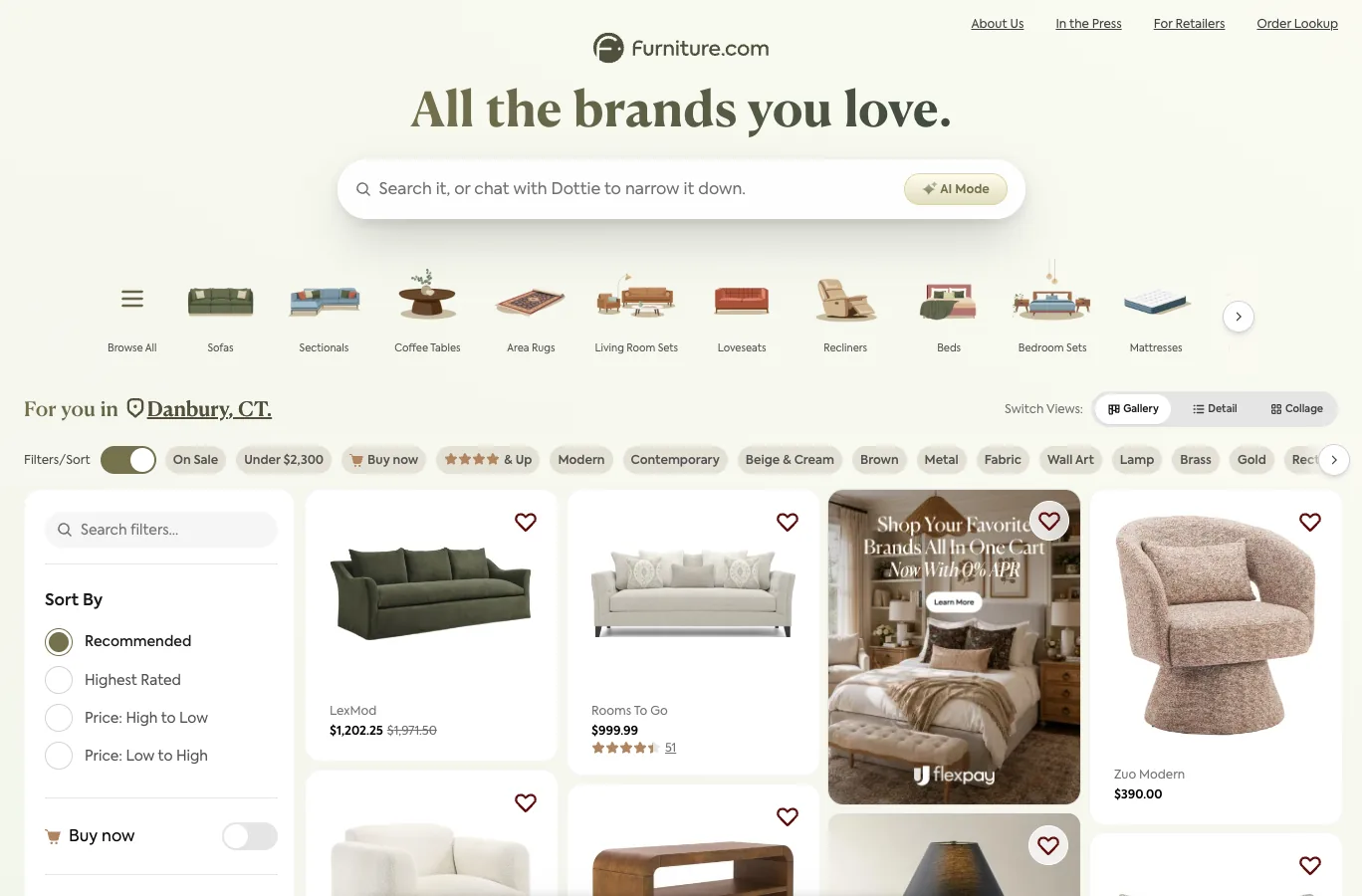
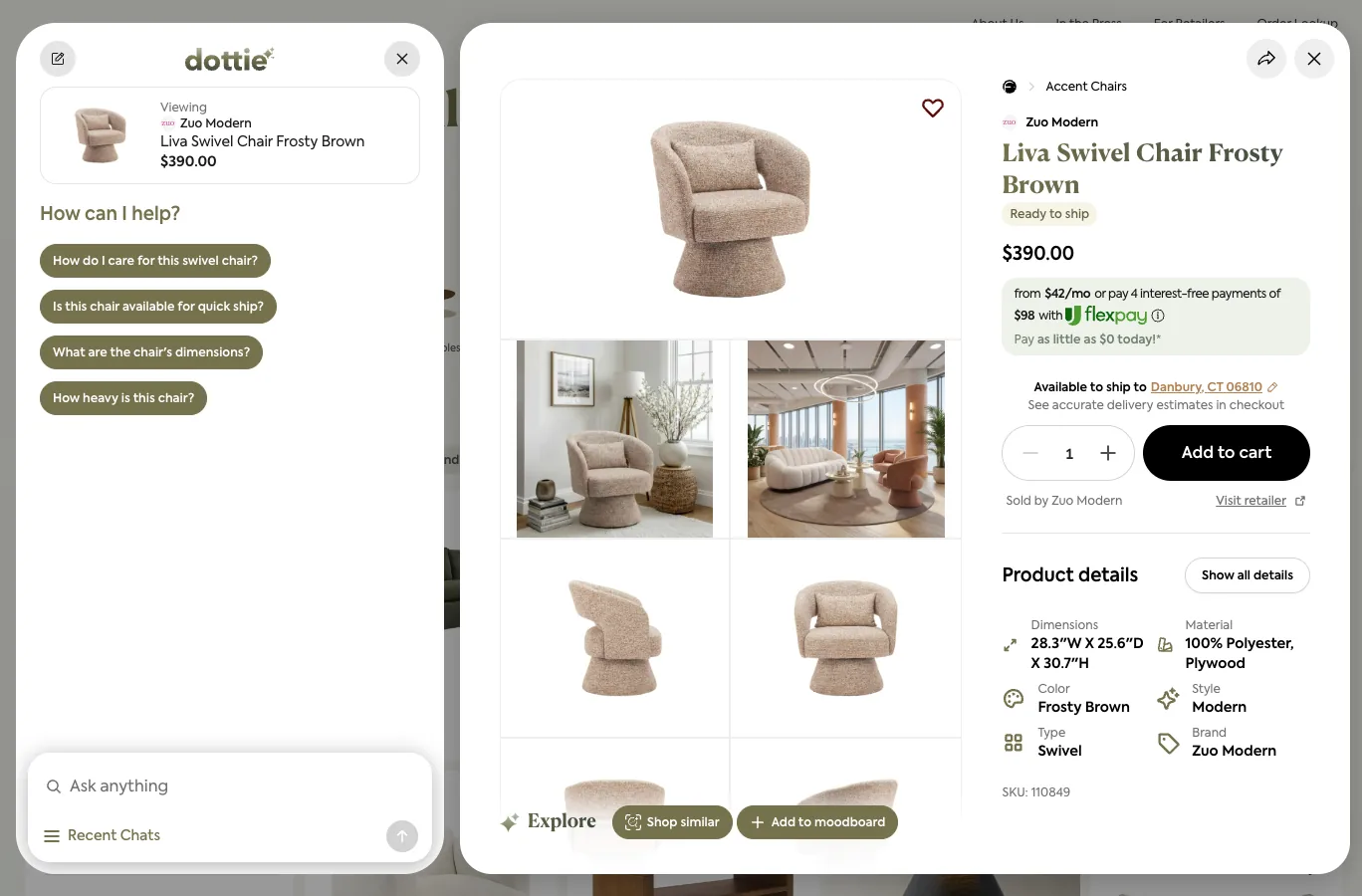
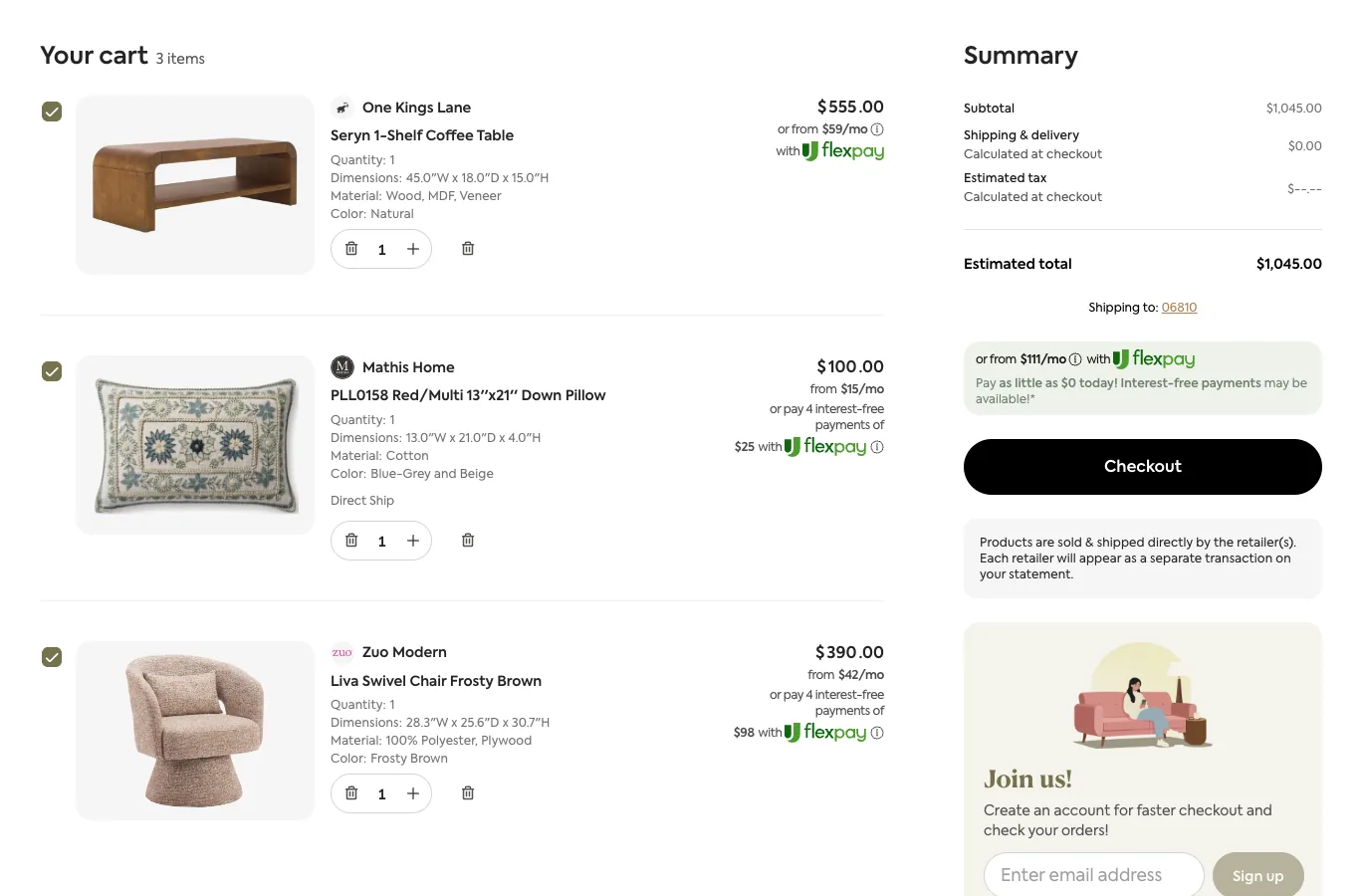
Shoppers browse every brand on Furniture.com and check out once. Each retailer still sells and ships its own order, and each appears as a separate transaction on the shopper’s statement.

Add agentic checkout to your AI agent, publication, marketplace or ads. Integrate into firmly once, and firmly connects to merchants on every industry-standard commerce platform.
We packed eleven bags for a month. One held everything and still fit the overhead bin.


One cart across every brand. Each brand sells and ships its own order.

Checkout completes here. The shopper never leaves.
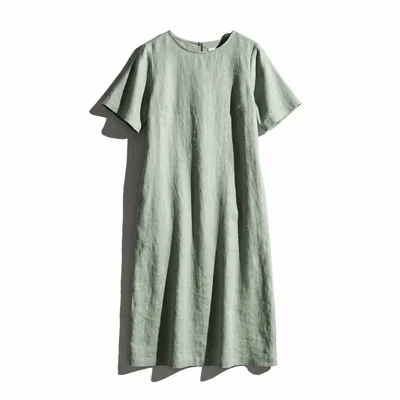
 Linen midi dressCustom Eau de parfum, 50 mlWooCommerce
 Two-person tentSalesforce
 Canvas weekenderBigCommerce
 Dome tentAdobe Commerce Leather holdallShopify Two-person tentSalesforce Canvas weekenderBigCommerce Dome tentAdobe Commerce Leather holdallShopify
 10-piece cookwareShopify
 Electrolyte mixBigCommerce
 Ripstop carry-allWooCommerce Eau de parfum, 50 mlWooCommerce 10-piece cookwareShopify Electrolyte mixBigCommerce Ripstop carry-allWooCommerce Bouclé swivel chairAdobe Commerce
 Three-seat sofaCustom
 Ultralight tentSalesforce Bouclé swivel chairAdobe Commerce Three-seat sofaCustom Linen midi dressCustom Ultralight tentSalesforce
Illustrative. Products and prices shown are examples.
Your agent needs real-time price, inventory, specs and shipping rules, not a stale feed.
One real-time record per product: pricing and inventory from the merchant’s store.
Every merchant runs a different platform and API.
Integrate into firmly once. Reach merchants on every industry-standard platform.
Send users to a merchant link and the conversation and the purchase leave with them.
Checkout in the chat. You keep the user and the purchase data.
Shoppable stories go stale: prices change and products sell out.
Real-time price and inventory in every article, every day it’s read.
Every retailer is another deal, feed and link format.
One integration, merchants on every industry-standard platform.
An affiliate link sends the reader away, and the commission often leaks with them.
Readers buy in the article. Attribution closes on your page.
Seller listings drift from what’s really in inventory and shippable.
Listings read live from each seller’s store, delivery rules included.
Onboarding each seller’s platform is its own project.
Sellers connect through firmly. Their engineers write no code.
Send buyers to each seller to pay and you lose the basket and the buyer.
One cart, one checkout. Each seller still sells and ships its own order.
Units promote products whose price or inventory changed after launch.
Every unit carries real-time price and inventory.
Making a unit shoppable is a build per advertiser.
One integration makes units shoppable across advertisers.
The click leaves your unit, so the conversion happens where you can’t see it.
Checkout inside the unit. Conversion and attribution stay with you.
Your agent needs more than a product page shows. firmly reads the merchant’s own store when someone asks: price, inventory, specs and shipping rules.
Example product. Real-time catalog is generally available.
Every merchant is a separate build, and every new protocol adds cost.
Illustrative, with example brands.


With firmly, checkout happens in place, so both sides keep what’s theirs.
70.22%
of online carts are abandoned before the order.
Average of 50 studies. Baymard Institute, Sep 22, 2025.
Shoppers browse every brand on Furniture.com and check out once. Each retailer still sells and ships its own order, and each appears as a separate transaction on the shopper’s statement.
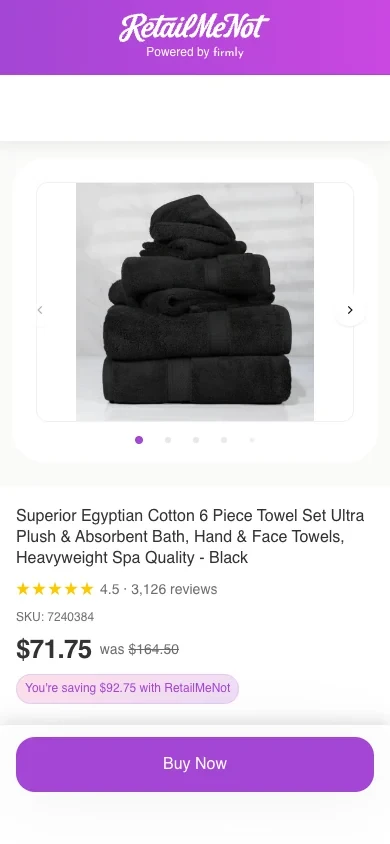
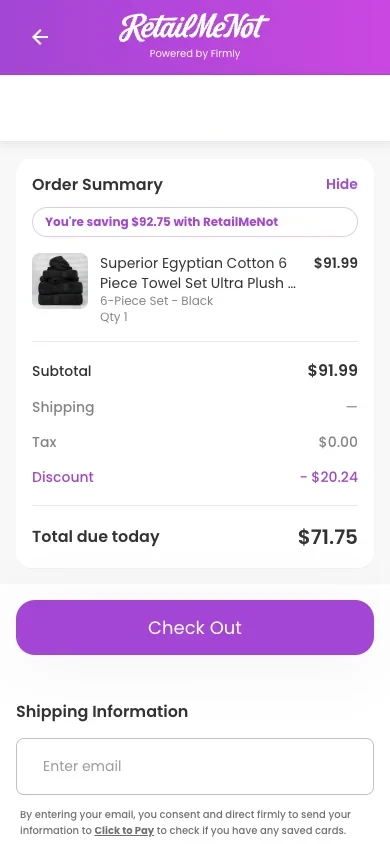
A branded deal page with the product, the price, and the saving, then a checkout that slides up over it. The shopper never leaves RetailMeNot, and the partnership is expanding.
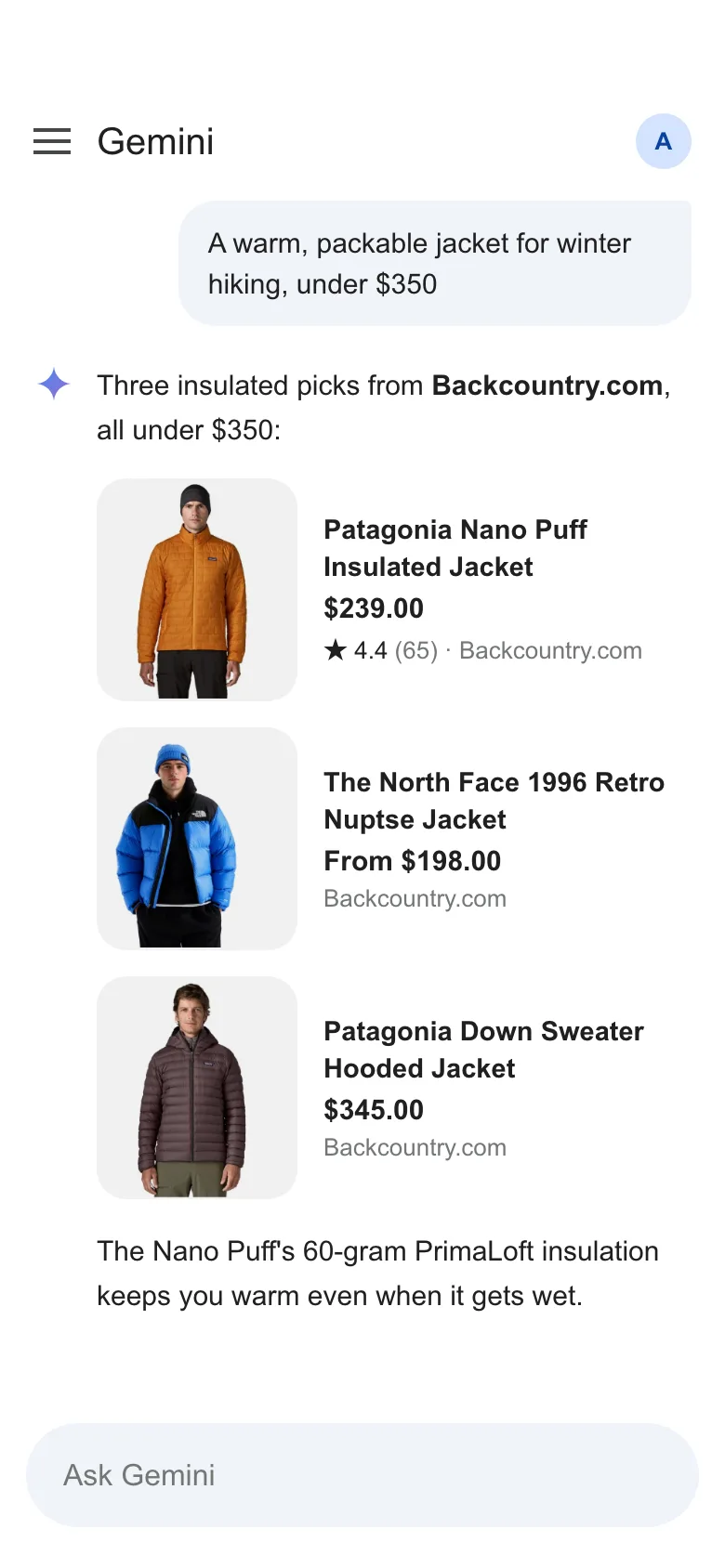
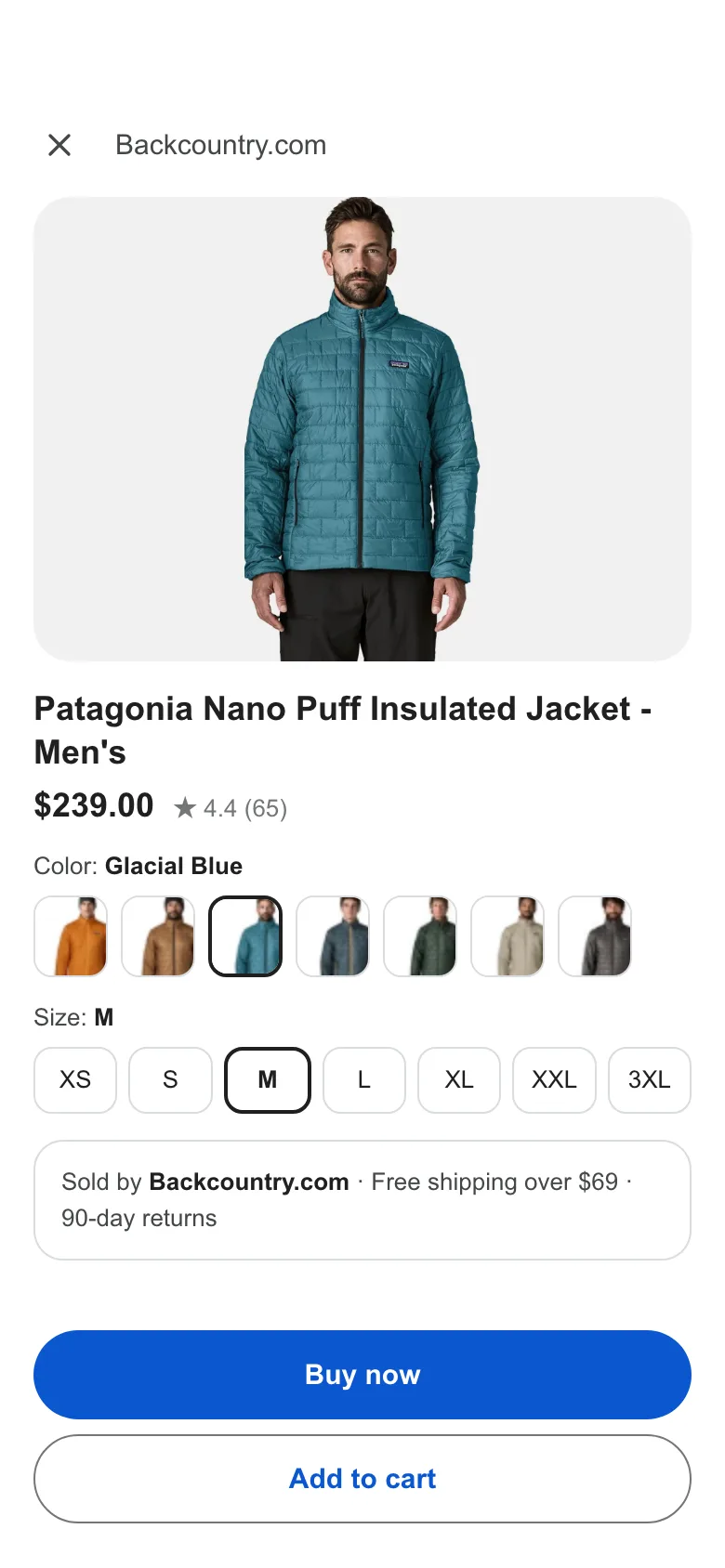
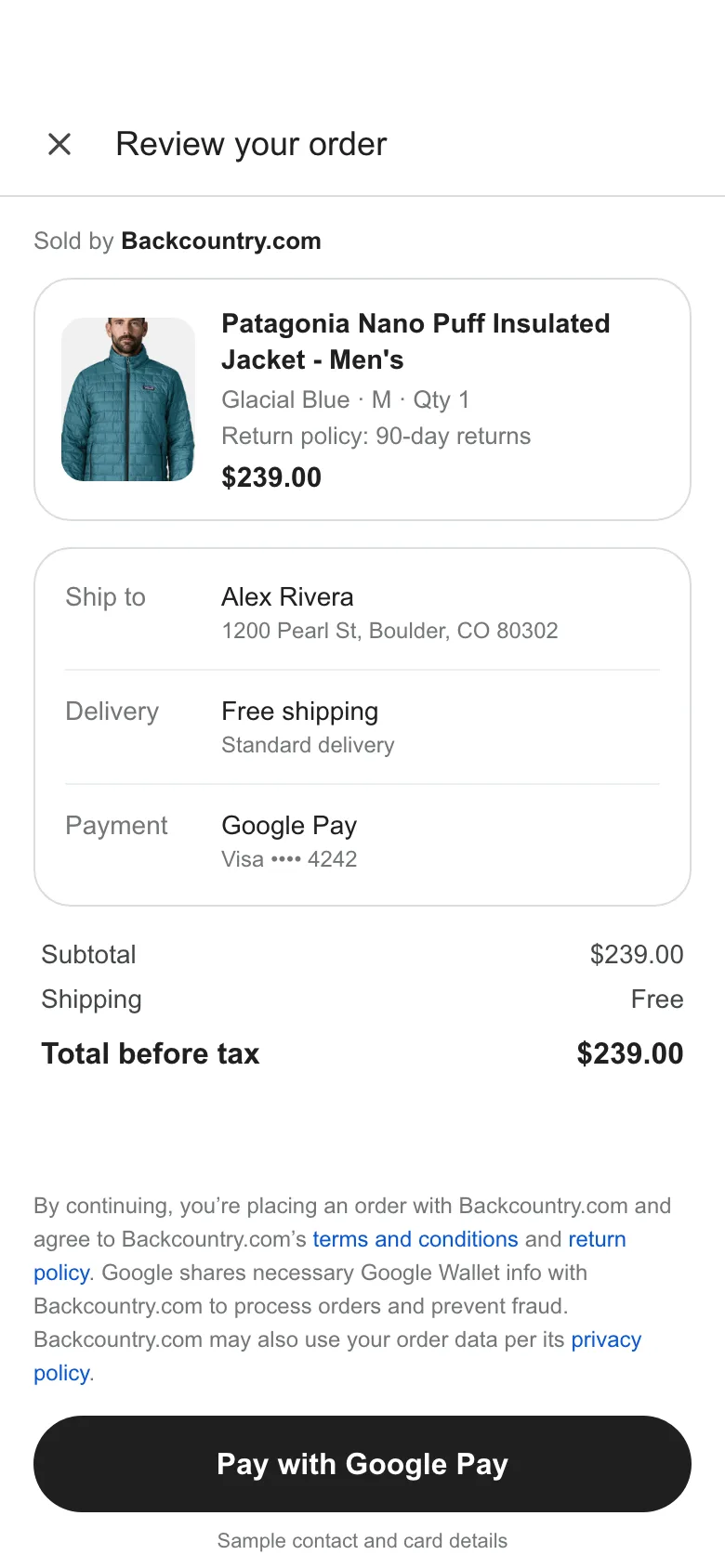
Shoppers ask Gemini for gear and buy from Backcountry.com without leaving the conversation. The order lands in Backcountry’s own system.
You never touch inventory, fulfillment, or returns. The merchant stays the merchant.